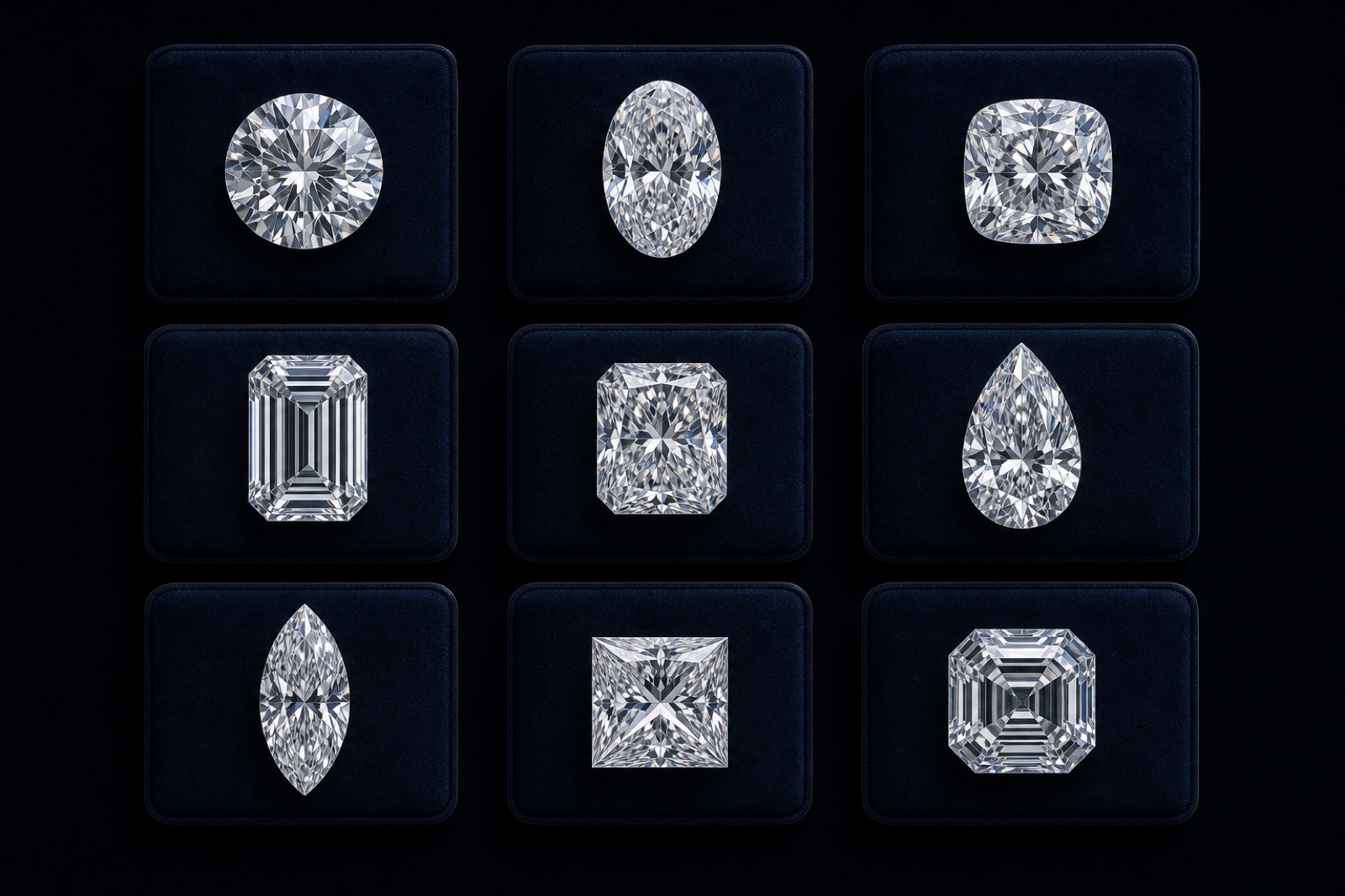
Round brilliant
The round brilliant is prized for brightness, fire, and balanced symmetry. Its established cut-grading system makes comparison more straightforward, and its versatility allows it to feel at home in nearly every setting style.
Oval
An oval offers brilliant-style sparkle with an elongated silhouette that can appear larger for its carat weight and visually lengthen the finger. Compare outline, symmetry, and the central bow-tie effect, which varies from one stone to another.
Cushion
Soft corners and a pillow-like outline give the cushion a romantic character. Cushions vary widely—from square to elongated and from broad, antique-inspired facets to a finer modern pattern—so visual comparison is especially important.
Emerald
Long step-cut facets create calm flashes of light and a clear, architectural appearance. Because the open pattern reveals the interior readily, clarity and the arrangement of the steps deserve close attention.
Radiant
The radiant combines a rectangular or square outline with brilliant-style facets. It provides lively sparkle, durable cut corners, and a strong contemporary presence. Length-to-width ratio determines whether it appears compact or elongated.
Pear and marquise
The pear combines a rounded end with a graceful point, offering a romantic, directional silhouette. The marquise is elongated at both ends and creates exceptional visual spread. In each, symmetry and protection of the pointed tips are important.
Princess and Asscher
The princess delivers bright, angular sparkle in a clean square outline; its corners should be protected by the setting. The Asscher uses concentric step facets and clipped corners for a structured, hall-of-mirrors effect with vintage character.
Measurements and ratios guide the search, but they do not determine beauty. Two diamonds with similar reports can have very different outlines and patterns in person.
How to choose
Begin with the silhouettes that naturally draw your eye. Then compare their proportions, movement, face-up presence, and relationship to the intended setting. The right shape is the one you continue noticing after the specifications fade into the background.
Compare in Person
See which shape belongs on your hand.
We can curate a focused selection around your preferred style, size, origin, and investment.
Arrange a Diamond Consultation