Cut: the source of sparkle
Cut describes how successfully a diamond’s proportions, symmetry, and polish return light. It is different from shape: round is a shape, while the quality of its facet arrangement is the cut.
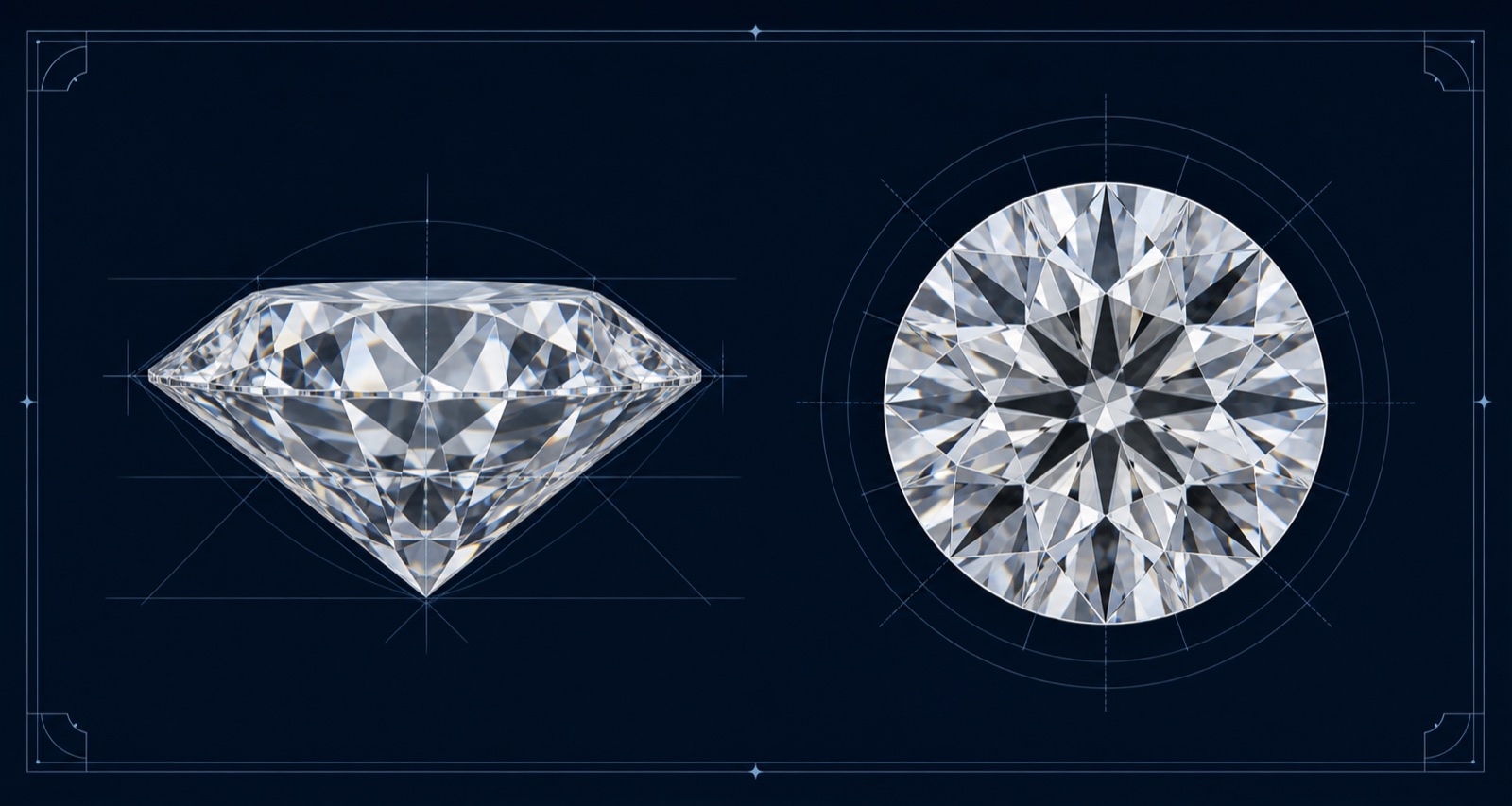
For round brilliant diamonds, cut is often a wise priority because brightness, fire, and scintillation are immediately visible. Fancy shapes require more visual judgment because their beauty cannot be reduced to one grade.
A beautifully cut stone can appear livelier—and sometimes larger—than a heavier diamond carrying weight where you cannot see it.
Color: how colorless it appears
The D-to-Z scale describes the absence or presence of yellow or brown body color. D is colorless; warmth becomes gradually more noticeable farther down the scale. Differences between neighboring grades are subtle.
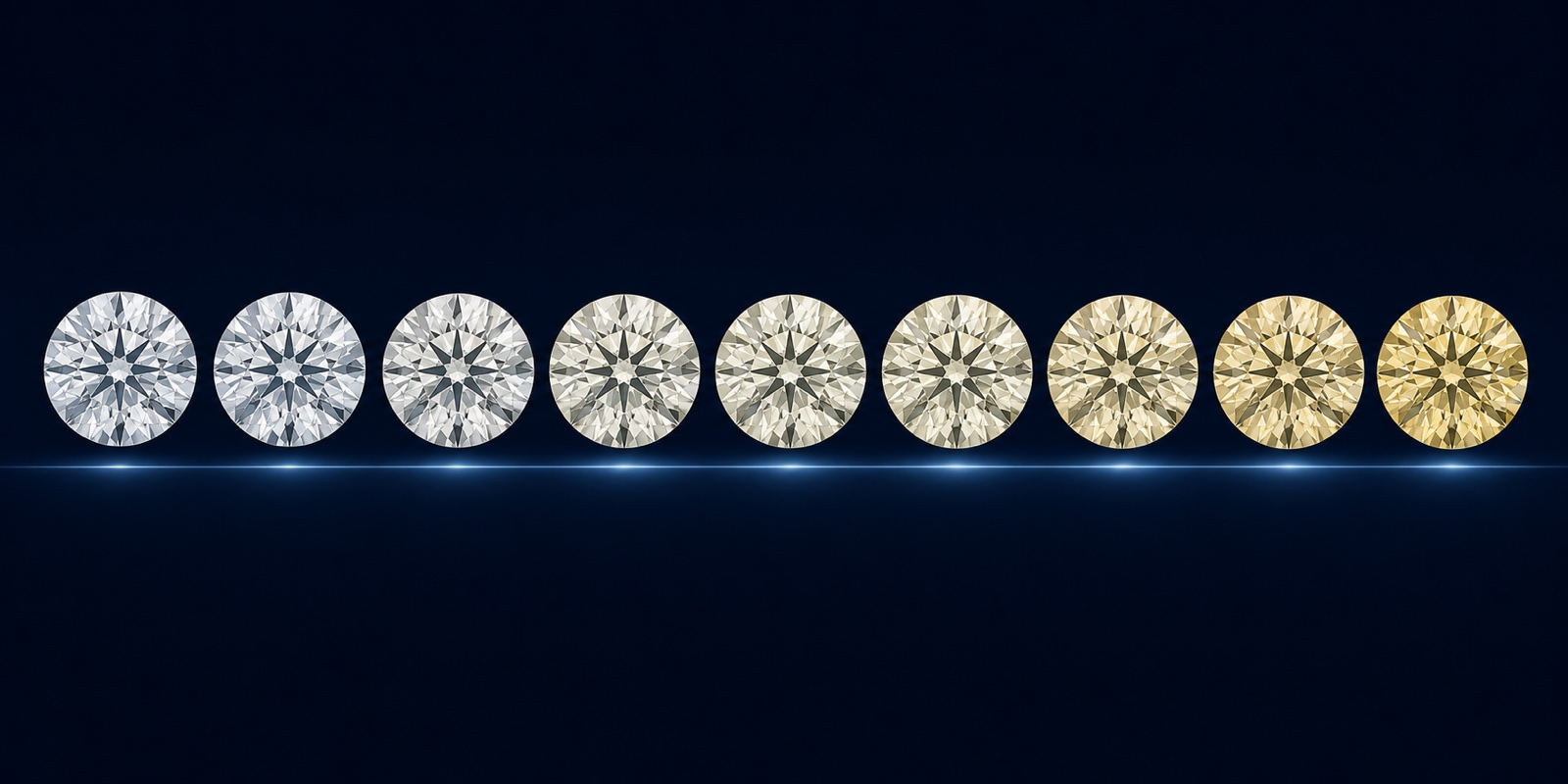
Metal and shape affect perception. A near-colorless diamond can look beautifully white in yellow or rose gold, while white metal may make warmth easier to notice.
Clarity: characteristics judged at 10×
Clarity evaluates inclusions inside a diamond and blemishes on its surface. Their number, size, type, relief, and position matter. Many are difficult or impossible to see without magnification, so the highest grade is not automatically the best use of a budget.
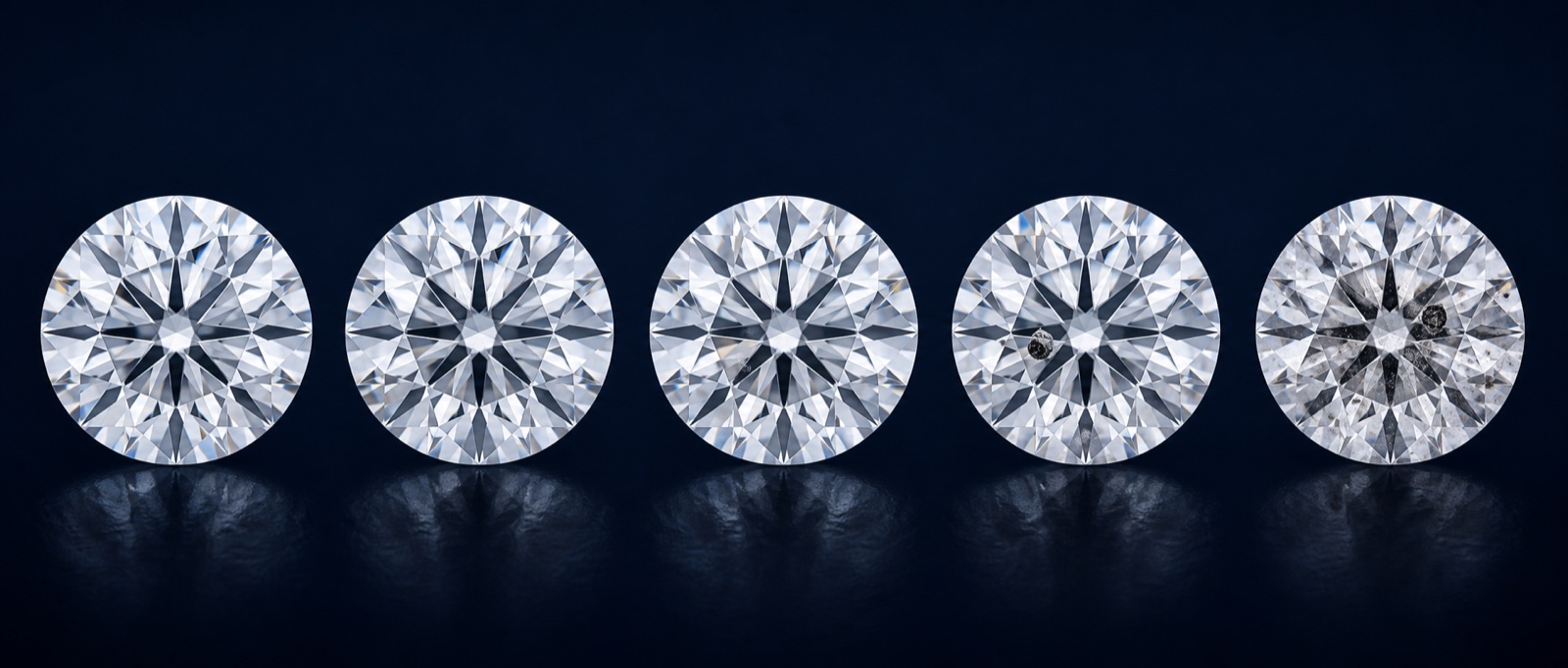
What matters in person is whether the stone is eye-clean, whether an inclusion affects transparency, and whether its location raises a durability concern.
Carat: weight, not visible size
One carat equals 200 milligrams. Carat measures weight, not diameter. Two equal-carat diamonds can face up at different sizes depending on shape and proportions.
Prices often rise near popular milestone weights. A well-proportioned stone just below a milestone can provide nearly the same presence while preserving budget for cut or the setting.
A considered balance
Begin with the quality you will appreciate every day. If brilliance is paramount, give precedence to cut. If presence is the priority, consider face-up dimensions and silhouette rather than carat weight alone. Open step cuts, with their broad reflective facets, often merit greater attention to clarity.
A grading report is an essential point of reference, but it cannot replace the experience of observing a diamond in motion and under varied light. The stone should be judged as a complete composition—not as a collection of isolated grades.
Personal Selection
Discover the distinction in person.
We will compare carefully selected diamonds, explain which differences are perceptible, and consider how each stone relates to the intended design.
Arrange a Diamond Consultation